How to Become a Fractional CTO: A Practical Guide
The fractional CTO model is one of the most compelling career paths available to experienced technology leaders today. You get to work with multiple companies, choose the problems that interest you, set your own schedule, and earn more per hour than most full-time CTO positions pay -- all while making a meaningful impact on businesses that genuinely need your expertise.
But becoming a fractional CTO is not as simple as updating your LinkedIn headline and waiting for the phone to ring. It requires a specific combination of experience, positioning, business development skill, and operational discipline that most technologists have never had to develop.
This guide walks you through the practical steps of building a fractional CTO practice -- from assessing whether you are ready, to finding your first clients, to managing multiple engagements without burning out.
What Makes a Good Fractional CTO?
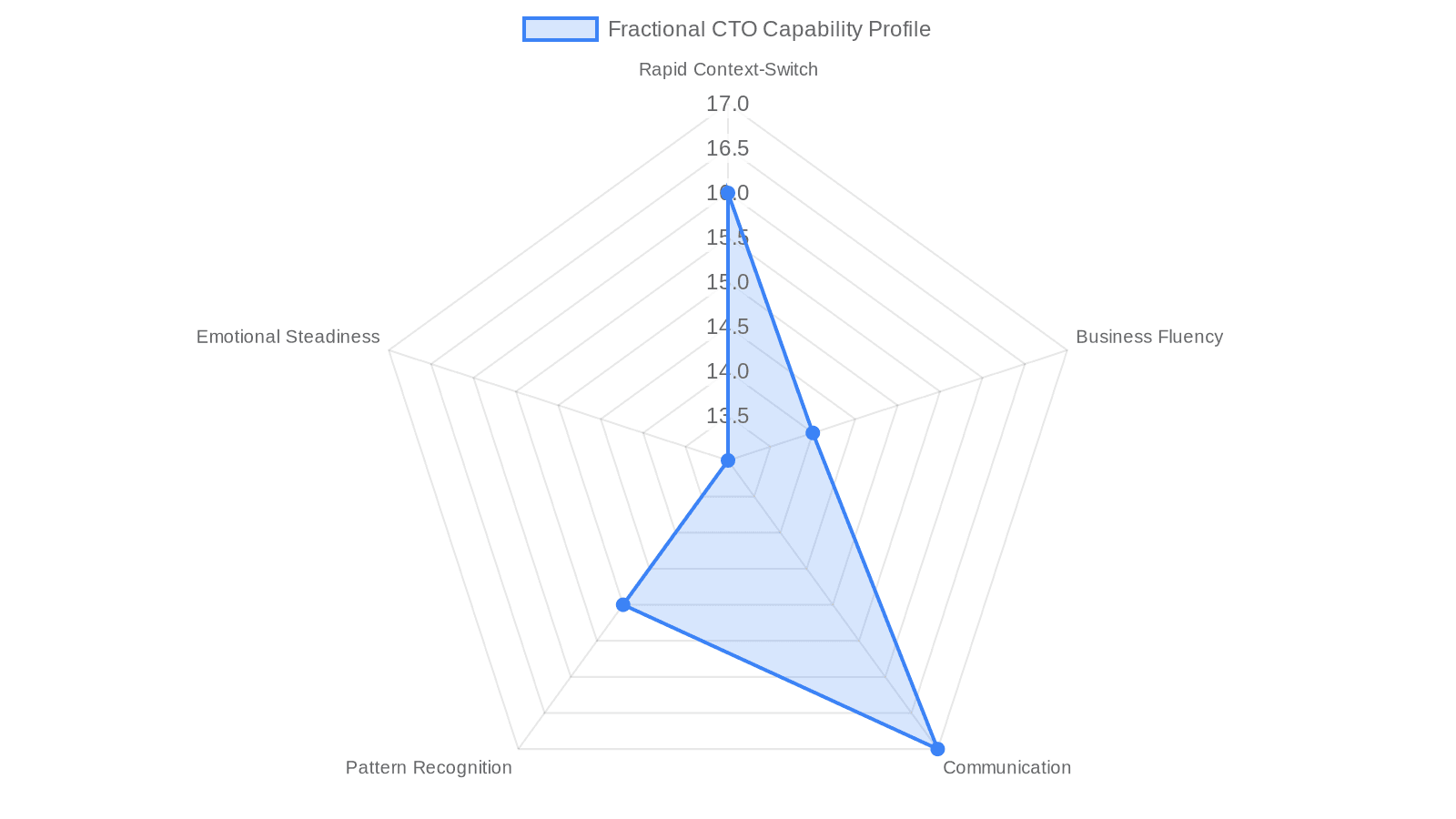
Before diving into the how, it is worth understanding what separates effective fractional CTOs from those who struggle.
A good fractional CTO is not simply an experienced developer or architect who has run out of patience for full-time employment. The role demands a particular set of capabilities that go beyond technical expertise.
Rapid context-switching. You will be working with multiple companies, each with different technology stacks, team dynamics, business models, and cultures. You need to drop into a new context, get productive quickly, and maintain quality across all engagements simultaneously.
Business fluency. Founders and CEOs do not hire fractional CTOs to write code. They hire you to translate between the business and the technology. You need to understand unit economics, runway, go-to-market strategy, and board dynamics well enough to make technology decisions that serve the business -- not just the engineering team.
Communication discipline. When you are only present ten to fifteen hours per week, every interaction has to count. You need to be exceptionally clear in your written and verbal communication, proactive about surfacing risks, and skilled at creating documentation that keeps teams aligned when you are not in the room.
Pattern recognition. The real value of a fractional CTO comes from having seen enough companies to recognise patterns. You have seen this architecture fail before. You have seen this hiring mistake before. You have seen this vendor lock-in play out before. That pattern library is what allows you to deliver outsized value in limited hours.
Emotional steadiness. Startups are chaotic. Founders are stressed. Teams are frustrated. You need to be the calm, experienced presence in the room -- someone who has seen worse and knows the way forward. If you need structure, predictability, and clear reporting lines to do your best work, the fractional model may not suit you.
If you want a structured way to evaluate where you stand across these dimensions, our CTO readiness assessment can help you identify specific strengths and gaps.
Assessing Your Readiness
Not every senior technologist is ready to go fractional. Here are the honest prerequisites.
Experience Threshold
You need a minimum of ten to fifteen years in technology, with at least three to five years in senior leadership roles (CTO, VP Engineering, Director of Engineering, or equivalent). Companies hiring fractional CTOs are paying for judgement that can only come from having made consequential decisions -- and lived with the results.
If you have held a full-time CTO or VP Engineering role at even one company and navigated real challenges (scaling a team, recovering from a technical crisis, executing a major migration, preparing for due diligence), you likely have enough raw material. If your experience is purely individual contributor or team lead level, consider pursuing a full-time senior leadership role first to build that foundation.
Financial Runway
Building a fractional practice takes time. Most people need three to six months to land their first paying engagement, and six to twelve months to reach a steady state of two to three concurrent clients. You need enough financial runway to cover that ramp-up period without panicking and accepting bad-fit engagements out of desperation.
A minimum of six months of living expenses is advisable. Twelve months is more comfortable and allows you to be selective about the clients you take on.
Network Depth
Your first clients will almost certainly come from your existing network -- former colleagues, founders you have worked with, investors you know, or people one degree of separation away. If your professional network is thin, spend six to twelve months deliberately building it before making the leap.
Tolerance for Ambiguity
There is no HR department, no quarterly review cycle, no predictable pay cheque. You are running a small business. If that prospect excites you, good. If it terrifies you, think carefully about whether this is the right move.
Take our readiness assessment to get a structured view of where you stand before making any decisions.
Building Your Practice
Once you have decided to pursue the fractional path, you need to build a practice -- not just look for work.
Positioning and Niche
The biggest mistake new fractional CTOs make is positioning themselves as generalists. "I can help any company with any technology challenge" sounds flexible, but it is actually invisible. Nobody searches for a generalist.
Pick a niche. This can be defined along several axes:
- Industry vertical -- fintech, healthtech, e-commerce, SaaS
- Company stage -- pre-seed, Series A, growth stage, pre-IPO
- Problem type -- technical due diligence, platform migration, engineering team building, security and compliance
- Technology domain -- cloud infrastructure, data engineering, mobile platforms, AI/ML
You do not need to refuse work outside your niche, but you do need a clear positioning statement that makes ideal clients think "this person understands my specific situation." The more specific your positioning, the easier it is for referral sources to think of you when the right opportunity arises.
Pricing Your Services
Fractional CTO pricing varies significantly by market, niche, and experience level. The most common models are:
- Monthly retainer -- a fixed fee for an agreed number of hours or days per month (most common)
- Day rate -- a fixed daily rate, billed against actual days worked
- Project-based -- a fixed fee for a defined scope of work (common for due diligence or architecture reviews)
Most fractional CTOs start with monthly retainers because they provide predictability for both parties. Your rate should reflect the senior executive value you are delivering, not an hourly contractor rate. Remember that you are providing strategic leadership, not just technical hours.
Research rates in your market and niche. Talk to other fractional executives. Price based on the value you deliver to clients, not the number of hours you spend. For detailed guidance on rate-setting, including three pricing frameworks and market data, see our fractional CTO salary and rate guide.
Legal and Operational Setup
Before taking on clients, sort out the basics:
- Business entity -- form an LLC, limited company, or equivalent structure in your jurisdiction
- Contract template -- invest in a solid services agreement that covers scope, payment terms, intellectual property, confidentiality, and termination provisions
- Insurance -- professional indemnity (errors and omissions) insurance is essential; general liability may also be required depending on your clients
- Tools -- set up invoicing, time tracking (even if you bill retainers, tracking time helps you manage utilisation), and a basic CRM to track leads and engagements
Finding Your First Clients

This is the part most technologists find hardest. You have spent your career being sought out for technical skills. Now you need to generate business.
Your Existing Network
Start with the people who already know and trust you. Send a thoughtful note to former colleagues, founders, investors, and advisors letting them know you are available for fractional CTO work. Be specific about the type of company and problem you are best suited for. Make it easy for them to refer you by being clear about who your ideal client is.
Do not send a mass email blast. Personalise each message. Mention specific shared experiences. People refer people they have a genuine relationship with.
Fractional Executive Marketplaces
Platforms that connect companies with fractional executives are an increasingly valuable channel. Fractional Chiefs is one of the more established marketplaces specifically designed for fractional C-suite talent, and it is worth creating a profile early. These platforms handle lead generation and often pre-qualify clients, which saves you significant business development time.
The key advantage of marketplaces is that they bring you deal flow you would never find through your own network alone. The trade-off is that you may pay a referral fee or accept platform-mediated terms. For most fractional CTOs, especially in the first year, the trade-off is well worth it.
Content and Thought Leadership
Writing about the problems your ideal clients face is one of the most effective long-term business development strategies. Blog posts, LinkedIn articles, conference talks, and podcast appearances all build credibility and keep you visible to potential clients.
The content does not need to be groundbreaking. Practical, experience-based writing about real technology leadership challenges resonates far more than abstract thought leadership. Write about the patterns you have seen, the mistakes companies make, and the frameworks you use to solve recurring problems.
Venture Capital and Private Equity Networks
VCs and PE firms frequently need to place fractional CTOs into portfolio companies -- for due diligence, post-acquisition integration, or to fill a leadership gap while they recruit a full-time hire. Building relationships with a handful of investors in your niche can generate a steady stream of referrals.
Offer to do a free technical assessment for one of their portfolio companies as an introduction. If you deliver value, word spreads quickly within a firm's portfolio.

Managing Multiple Engagements
The operational challenge of fractional work is managing two to four concurrent engagements without any of them suffering.
Time Allocation
Most fractional CTOs work with two to four clients simultaneously, dedicating one to two days per week to each. Be realistic about your capacity. Three clients at two days each leaves you one day per week for business development, administration, and rest. Four clients at two days each leaves you nothing.
Build a consistent weekly schedule. Assign specific days to specific clients. This creates predictability for both you and the client teams.
Setting Boundaries
When a client is paying a retainer for two days per week, they will inevitably want three. Be clear from the outset about your availability, response times, and what constitutes an emergency worth interrupting another engagement for. Most clients are reasonable about this once expectations are set properly.
Documentation Discipline
Because you are context-switching constantly, your documentation needs to be exceptional. After every significant meeting or decision, write it down. Create running documents for each client that capture current priorities, open decisions, risks, and action items. Your future self (returning to this client after two days with another company) will thank you.
Knowing When to Let Go
Not every engagement works out. Some clients are not ready for the advice you give them. Some have cultural issues that make the relationship draining. Some simply do not value the fractional model enough to make it work. Learn to recognise bad-fit engagements early and exit gracefully. Your reputation depends on the quality of your work, and you cannot do quality work for a client who is not a good fit.
Common Pitfalls
Having coached many technology leaders through this transition, these are the mistakes I see most often.
Under-pricing. Technologists tend to anchor on their previous salary divided by working hours. Fractional CTO work delivers executive-level value and should be priced accordingly. You are not selling time; you are selling judgement, pattern recognition, and outcomes.
Over-committing. Taking on too many clients too quickly is a recipe for burnout and poor delivery. Start with one or two and add more only when you have proven you can sustain quality.
Neglecting business development. When you are busy with client work, it is tempting to stop marketing yourself. This creates a feast-or-famine cycle where you scramble for work every time an engagement ends. Dedicate consistent time to business development even when you are fully booked.
Becoming a contractor instead of an executive. If you find yourself writing code, fixing bugs, or doing operational tasks that should be handled by the client's team, something has gone wrong. Your value is in leadership, strategy, and decision-making -- not execution. Resist the pull toward hands-on work, no matter how satisfying it is in the short term.
Skipping the legal basics. Operating without proper contracts, insurance, and a business entity exposes you to unnecessary risk. Sort these out before you take on your first client.
Ignoring the loneliness. Full-time roles come with built-in social structures -- a team, an office, shared rituals. Fractional work can be isolating. Build a peer network of other fractional executives, join communities, and make deliberate space for professional connection.
Conclusion
The fractional CTO path offers a genuinely compelling career model for experienced technology leaders -- autonomy, variety, impact, and strong economics. But it is a career transition that requires deliberate preparation, honest self-assessment, and a willingness to develop skills (business development, positioning, client management) that most technologists have never needed before.
Start by understanding where you stand. Our CTO readiness assessment will give you a structured view of your strengths and development areas across the five dimensions that matter most for technology leadership.
If you want to understand the demand side -- what companies are actually looking for when they hire a fractional CTO -- read our guide on what a fractional CTO is and what they do.
The companies that need you are out there. The question is whether you are ready to find them -- and whether they can find you.
Ready to level up?
Discover your strengths and gaps with our free CTO Readiness Assessment.
Take the CTO Readiness Assessment